Mexico
Yucatan Peninsula
🇲🇽Caribbean coast, jungle and colonial cities.
Whale sharks, cenotes, Maya ruins and flamingos, with a scorpion at 2 a.m.
Good to know
Yucatán Peninsula
The Yucatán Peninsula sits between the Caribbean Sea and the Gulf of Mexico. We crossed two states that felt surprisingly different. Quintana Roo is the Caribbean side: turquoise water, reefs, beaches and tourist hubs like Cancún, Playa del Carmen and Tulum. Inland, Yucatán means jungle, smaller towns, Maya sites, cenotes and colonial cities like Valladolid and Mérida.
The land is flat limestone with almost no surface rivers. The water flows underground through caves and cenotes, which is why cenotes are everywhere and were so important to the Maya for water, rituals and daily life.
Maya culture didn't disappear with the ruins of Chichén Itzá, Cobá and Tulum: communities, food and traditions live on, and Yucatec Maya is spoken alongside Spanish. The food shifts too: seafood and international restaurants on the coast, then cochinita pibil, poc chuc and papadzules inland, best discovered in Mérida and Valladolid.
☄️ Wait... dinosaurs?
A giant asteroid hit near Chicxulub 66 million years ago, the one linked to the extinction of the non-avian dinosaurs. The crater is buried, but an arc of cenotes follows part of it. Swimming in one felt connected to a much bigger story.
🚧 Tope! Vado!
“TOPE!” for a speed bump, “VADO!” for a dip in the road. Whoever spots one first yells. It became our family road-trip vocabulary.
👋 Who is waving at us?
Around tourist areas people wave at your car: a parking spot (tip expected), excursions, tourist info... or a real checkpoint. Don't assume, look carefully before stopping.
🎟️ VISITAX — don't forget it
Foreign tourists in Quintana Roo (Cancún, Playa del Carmen, Tulum, Isla Mujeres) pay this tourist tax. Pay online, keep the proof, and use the official government site: lookalikes may add fees.
For us, the biggest surprise: just by driving across the peninsula, beach, reef, jungle, cenote, Maya ruins, colonial city and mangroves all fit in one road trip.
Was it worth it?
Beaches, jungle and colonial cities
Our route in three parts. Tap a numbered pin to jump to that part of the trip.

Map data ©2026 Google, INEGI
Cancún + Playa del Carmen + Tulum
Playa del Carmen is about one hour from Cancún, so it was also easy to pick up family who joined us during the trip. We chose Playa because we wanted to avoid Cancún's Hotel Zone and the huge all-inclusive resorts. We stayed in Playacar, just outside the busy center of Playa del Carmen. Our place was really cool, with a pool, a private cenote, Maya ruins nearby and wildlife everywhere.
But our real first surprise came before we even saw the beach. Because of a flight problem, we arrived at 2 a.m. We were exhausted and ready to sleep, and then we found a scorpion inside. First wild scorpion for us. At 2 a.m. Perfect timing. We had to figure out how to catch it safely until security came to take it away. Everything was fine, but after that we spent the first day looking under things and checking every corner. Maybe a little paranoid.
Playa is definitely still touristy. Very touristy. There are restaurants everywhere, souvenir shops, excursions and free shows around Parque Los Fundadores. The main streets are always busy and full of life. The downside is that someone is almost always trying to sell you something. Prices can also be pretty high, even for food.
We liked Playa, but for the atmosphere we preferred Puerto Morelos. It felt smaller, calmer and more local. More like a fishing village than a resort town. It still has tourists, but also beautiful beaches and some really good snorkeling.
Would we return? Yes, the resort was great and there were many different tourist spots to visit.
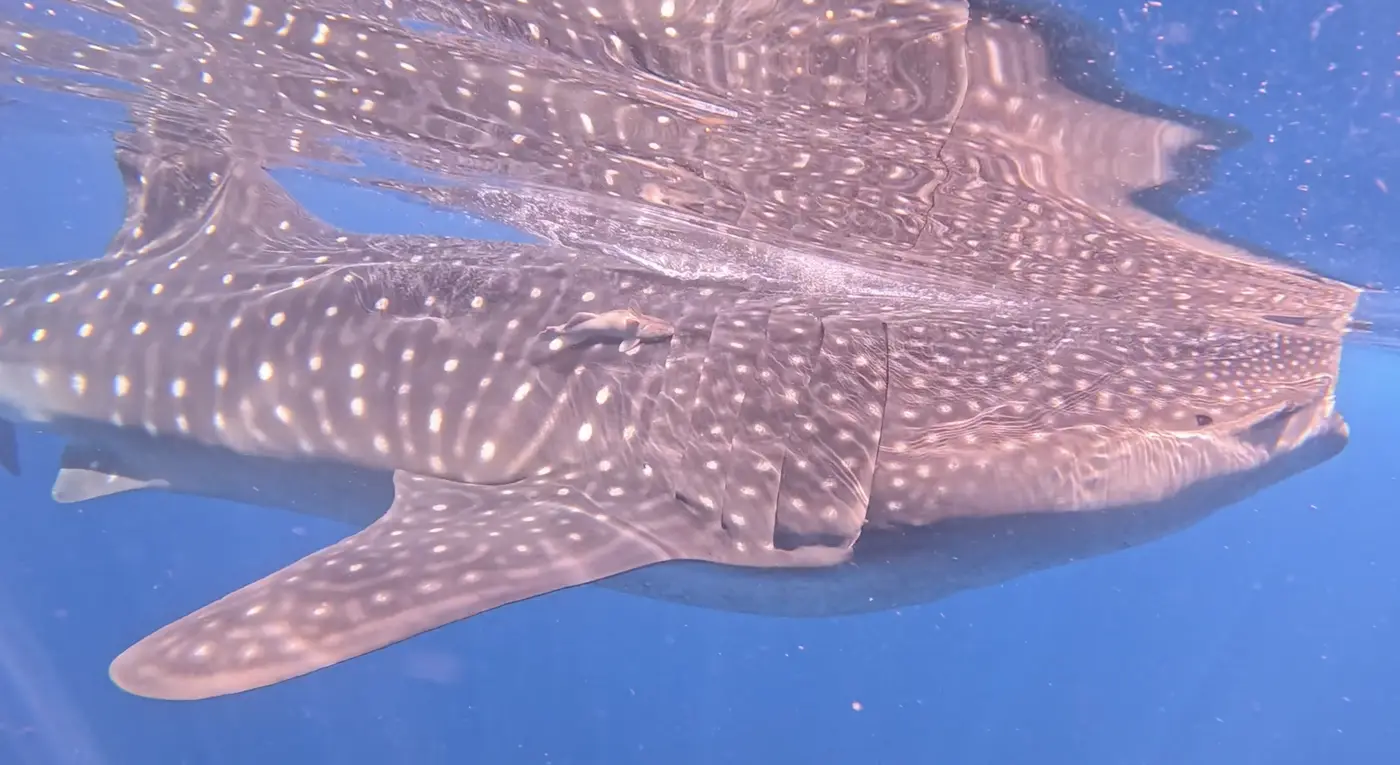
The whale shark tour was one of the experiences we were waiting for the most. The day started at 5 a.m. in Playa del Carmen. Way too early. We were a small group of about 12 people, and the staff was great, from the van driver to the guides and boat crew. Once in Cancún, we got on the boat and headed far offshore.
Before leaving, the crew asked if we wanted seasickness medicine. Almost everyone said yes. I said no. Big mistake. About an hour later, my brother and I were seasick.
But then we started seeing wildlife. First turtles, then dolphins, and finally whale sharks. Suddenly, being seasick didn't matter that much anymore.
After the safety instructions, we entered the water in small groups. We had three chances to swim near the whale sharks. It was incredible. They are massive when you are actually in the water next to them. They look like they are moving slowly and calmly, but they can actually swim up to 3 mph (5 km/h). With those huge tail sweeps, they move much faster than you expect. Trying to stay alongside one is a real workout. You need strong, steady kicks with your fins, and even then it is hard to keep up. We could watch them swimming and feeding just a few meters away. One of those moments when you stop talking and just watch.
Definitely one of the best experiences of the trip.
Would we do it again? Yes. Worth seeing? Very worth seeing. Would we change anything? No changes.
On the way back, we stopped around Isla Mujeres for food, drinks and snorkeling. The water was super clear and the reef was full of fish, but it was also crowded. Lots of tourist boats were stopping in the same snorkeling areas. We still enjoyed it, but after swimming with whale sharks in the open ocean, this part felt much more touristy. We still had a great moment with a squid.
We are usually not amusement-park people when we travel. If we visit another country, we prefer exploring the country instead of spending a day doing rides. So at first, Xcaret wasn't an obvious choice for us. But Xcaret is different. There are several parks from the same company, but this was the only one that really interested us, and this one was worth it. You need a full day and evening because the place is huge. There aren't really traditional amusement-park rides. Instead, you can swim through underground rivers, see wildlife and aquariums, explore Maya culture, walk through the jungle and discover Mexican art and traditions. It felt much more connected to Mexico than we expected.
At night, there is a huge cultural show about Mexican history and traditions. It was beautiful, but also very long when you have already spent the entire day walking and swimming! Something else we really liked was their approach to the environment.
Before entering some water areas, they check sunscreen and insect repellent. If yours isn't reef-safe, you can't use it and they provide an alternative for free. That was a small detail, but an important one for us. When thousands of people visit the same natural places every day, protecting them should be part of the experience.
Would we return? Yes, XCaret is the best. Would we change anything? No changes.
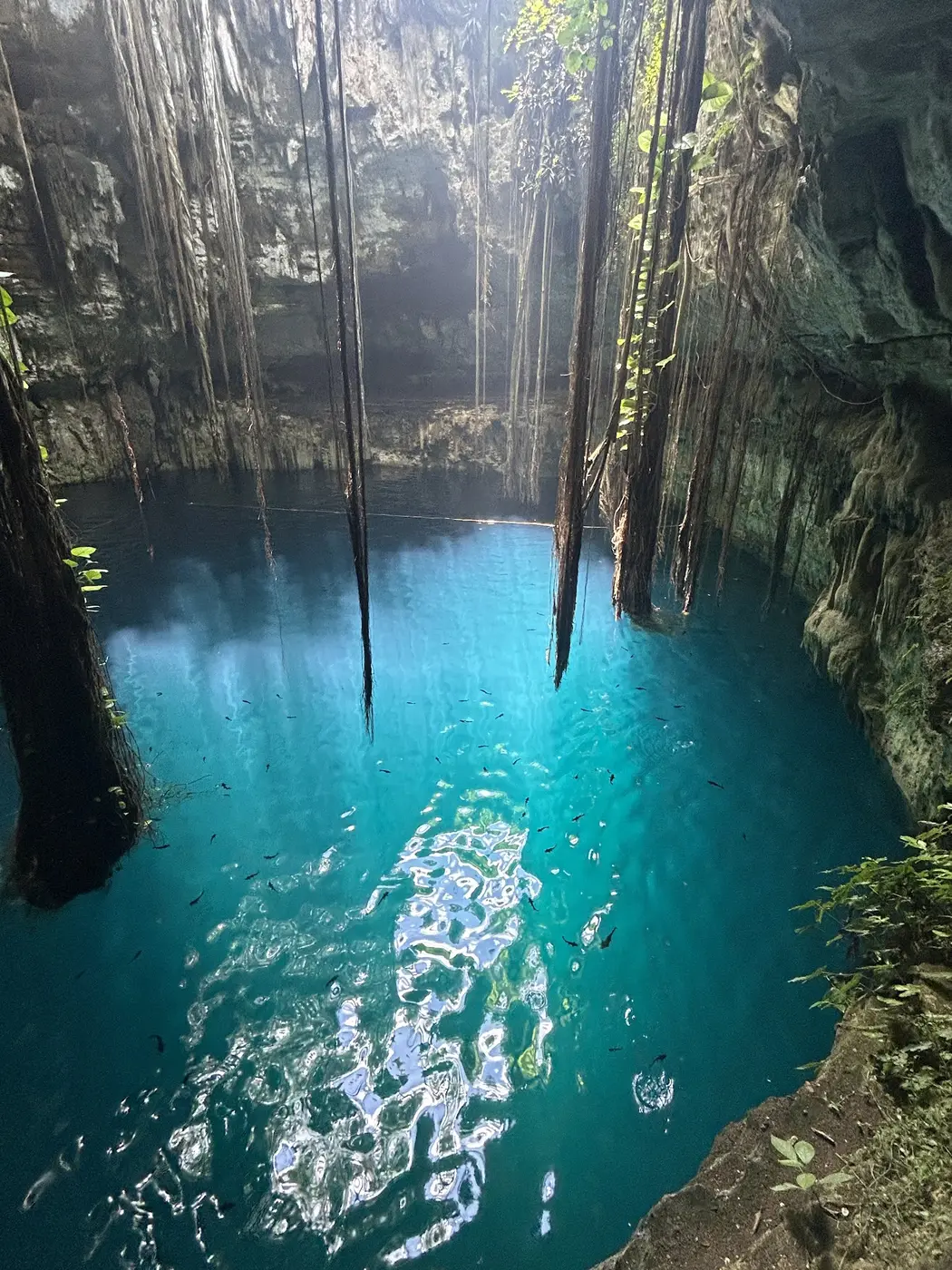
We visited a lot of cenotes during this trip, and somehow we never got tired of them. It can be extremely hot in Yucatán, so jumping into cool, clear freshwater feels amazing. Some cenotes are open to the sky, others are hidden inside caves. Some have fish everywhere, while others are dark and almost silent. Every one feels different.
Visiting so many also made us think about what these places have become. Cenotes were sacred places for the Maya. Today, many are mainly used for swimming and tourism. Of course, we were tourists swimming in them too, but sometimes it felt like their history was getting lost behind the fun part. They also seem very fragile.
We loved the cenotes, but we just hope tourism doesn't slowly destroy what makes them special.
Would we return? Yes, cenotes were great, but it depends on which cenote you go to. Worth seeing? Worth seeing.
Yal-Kú was one of our hidden gems. Getting there was a little strange, with small roads and not much around. At first, we weren't completely sure we were going the right way. Then we arrived, and the lagoon was beautiful. The freshwater mixes with the sea here, creating a protected lagoon full of fish. The water was clear and snorkeling was easy. It also felt very safe because there were no big waves like you can get in the ocean. There are hammocks, benches and tables all around, plus showers, toilets and parking. The food wasn't the highlight, but we didn't come for the food. We came for the water.
Compared with some of the famous snorkeling places around Cancún and Isla Mujeres, Yal-Kú felt calmer and much easier to enjoy. Swim, snorkel, relax in a hammock, then get back in the water. Nothing complicated. Just a really beautiful place.
Would we return? Yes, the lagoon was very beautiful and great for snorkeling. Would we change anything? No changes.
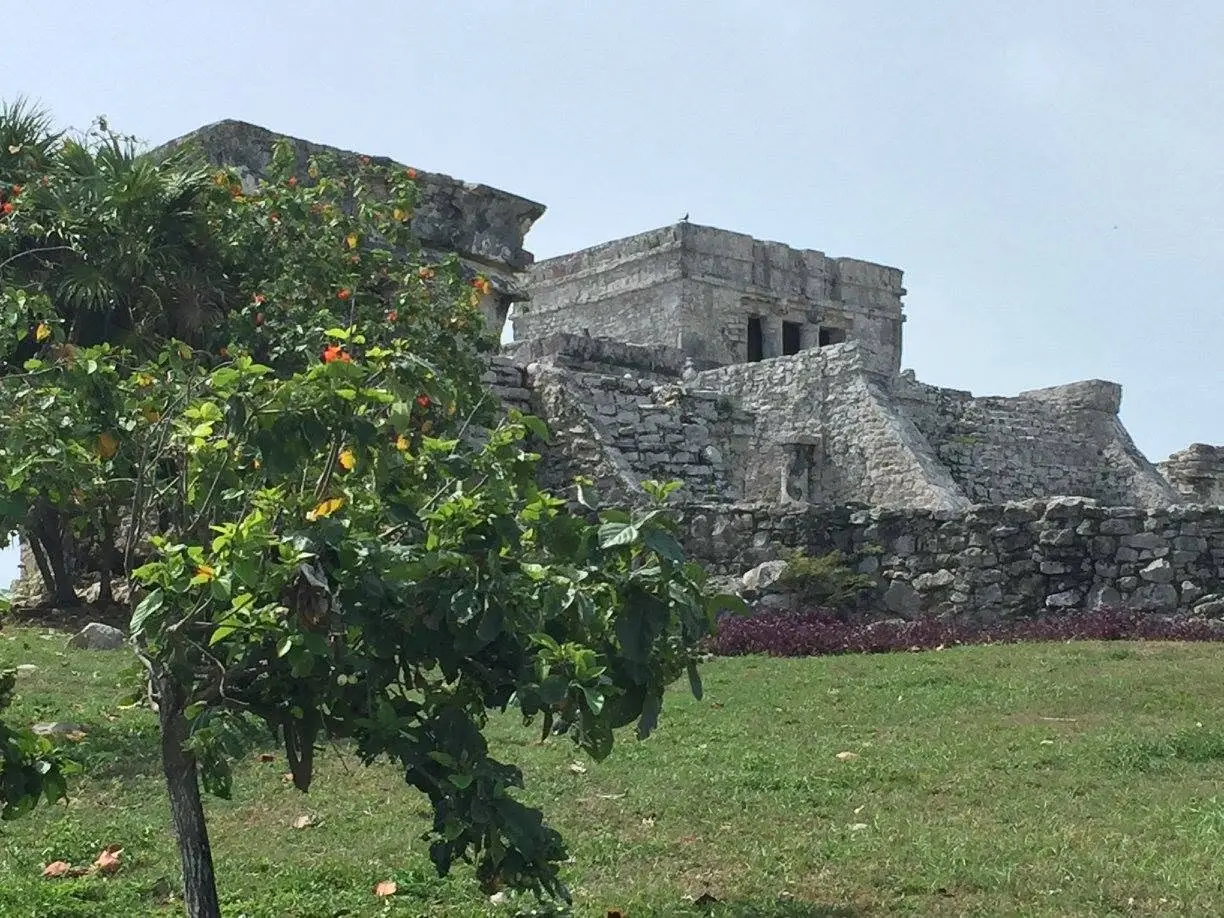
Before leaving the coast, we also visited Tulum and Akumal. Tulum was impressive, but also huge, extremely crowded and very hot. We visited during a heat wave, so walking around the archaeological site under the sun was exhausting. But the location makes it special. The Maya ruins sit right above the Caribbean, with cliffs and turquoise water in the background. Even with the crowds and the heat, those ocean views were beautiful and completely different from the other Maya sites we visited.
Akumal had another kind of coastal atmosphere. It felt more relaxed, with a little hippy and artistic spirit that we liked. After the crowds of Tulum and the busy atmosphere around Playa del Carmen, it was nice to find a place that felt smaller and more laid-back. It still attracts plenty of visitors, but the vibe felt different.
Valladolid
Leaving the coast changed the feeling of the trip completely. We left Puerto Aventuras and headed inland toward Valladolid, with Cobá as our main stop. After days around beaches and the Caribbean, we were suddenly surrounded by jungle.
Cobá was one of the Maya sites we really enjoyed because you don't just walk from ruin to ruin. The site is huge, so we rented bikes to explore it. Riding through the jungle between ancient structures made the visit much more fun, especially in the heat. It also gave us a better idea of how large this Maya city once was. After Cobá, we stopped at a cenote before continuing to Valladolid. Ruins, bikes and then jumping into cold water. Pretty good combination for one day.
Would we return? Yes, the biking through the forest to the ruins was amazing and worth seeing. Would we change anything? No changes.
Valladolid became our base for four nights, although we changed houses halfway through our stay. It was also a big change from the coast. Less beach-tourism feeling and much more of the Yucatán atmosphere we were looking for. Colorful streets, colonial buildings, local restaurants and an easy location for exploring the archaeological sites and cenotes around the area.
The next day was Chichén Itzá. This is one of those places you have seen in pictures so many times that you wonder if seeing it in real life will actually feel special. It does. El Castillo is the obvious first thing everyone looks at, but there is much more around it once you start exploring. The site is impressive, but also much busier and more touristy than Cobá. There are vendors everywhere and a lot of visitors, so the experience feels completely different.
Visiting both was actually perfect because they showed us two very different ways of experiencing Maya history. One through the jungle on bikes, the other standing in front of one of the most famous archaeological sites in the world.
Would we return? Probably not, it was way too hot and very crowded. Worth seeing? Worth seeing if you haven't yet, but no need to come back.
One of our best surprises in Valladolid was Conato restaurant, recommended by our host. From the street, the entrance looks small and we had no idea what was hiding behind it. Once inside, wow. The place opens into this beautiful, calm space with murals, local crafts and a gorgeous garden. It mixes Yucatán and Mexican traditions with a more modern, bohemian style. The food was excellent too, with local dishes like cochinita pibil, poc chuc and papadzules.
We probably wouldn't have found it without our host's recommendation, and it became one of our favorite restaurant experiences.
Best food surprise? None. Tacos, quesadillas and burritos are the best.
Mérida
After Valladolid, we continued west to Mérida. The pace changed again. After beaches, cenotes and Maya ruins, Mérida felt more like a place where we could slow down and just enjoy being in a city. We explored the center, walked around the squares and took the Turibus to get a better view of the city without walking all day in the heat. Mérida felt colorful and full of history, with colonial buildings, busy streets and little details that made us stop and look.
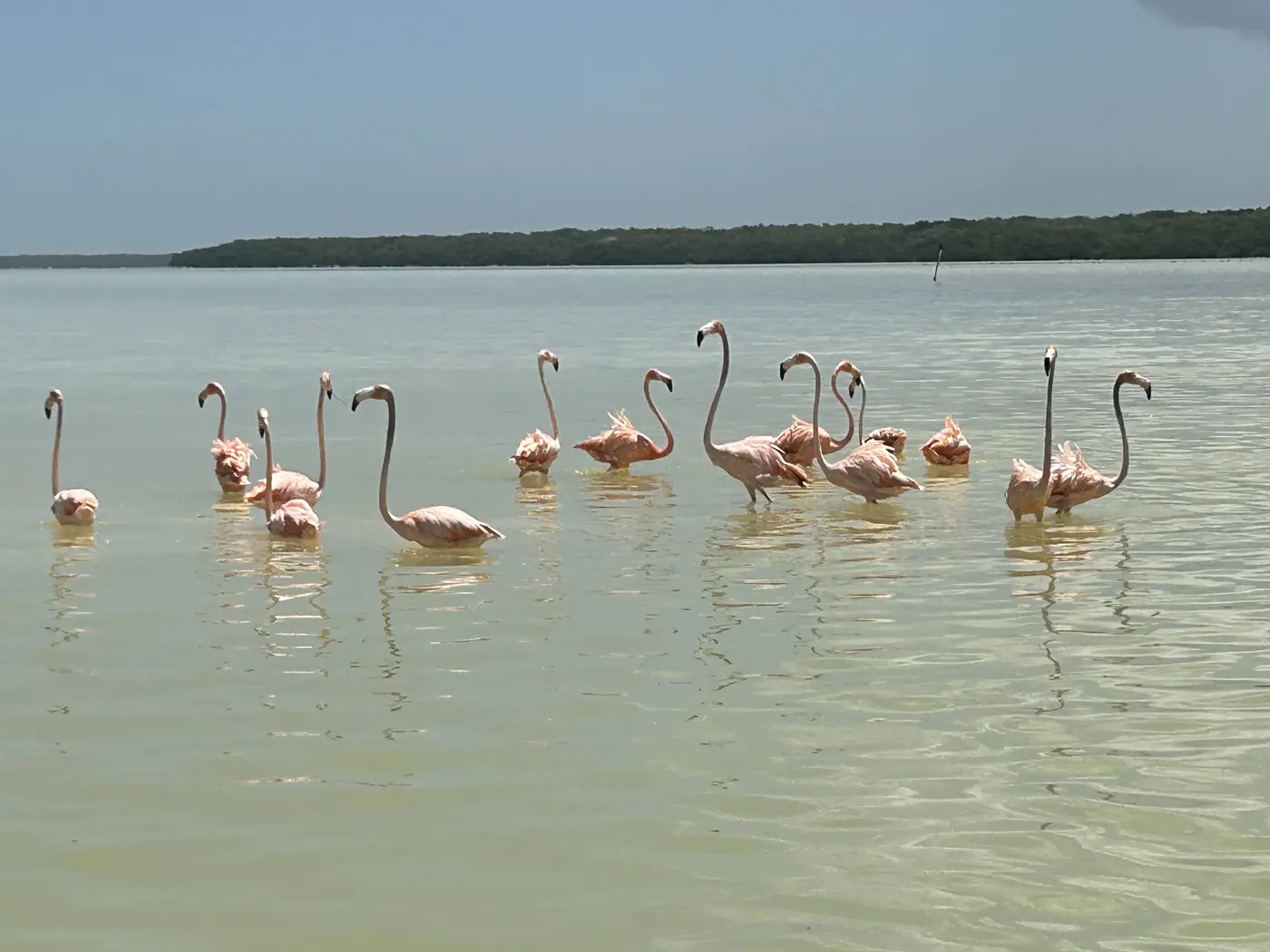
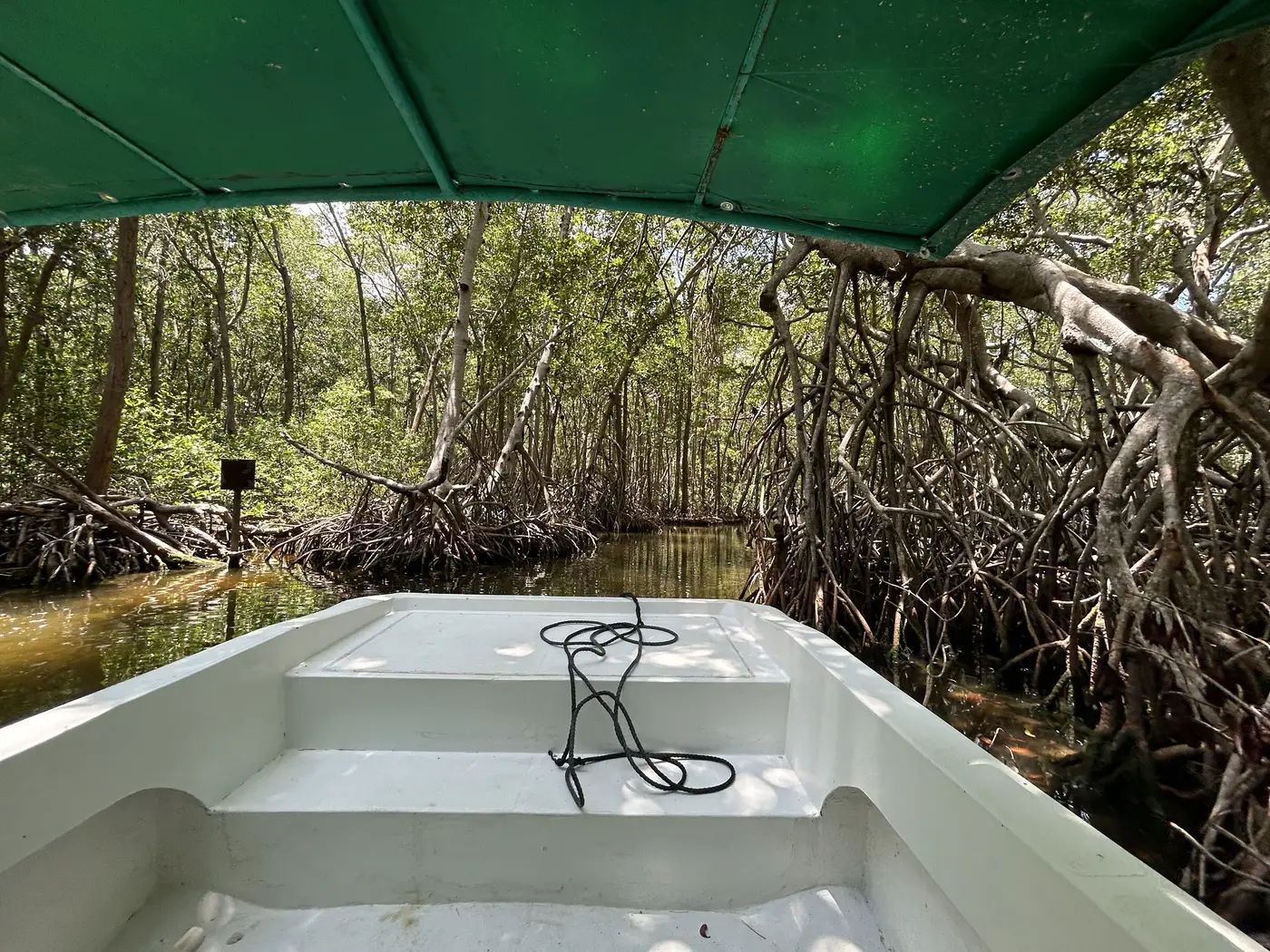
From Mérida, we also explored the western coast of Yucatán. Celestún was all about nature. We took a small boat through the mangroves, where the landscape felt completely different from the Caribbean coast. The water, mangrove tunnels, birds and especially the flamingos made this one of the quieter wildlife moments of the trip.
Seeing flamingos in the wild is much better than seeing them behind a fence. From far away they look like a big pink line across the water, but once the boat gets closer you realize how many there are.
Would we return? Yes, seeing the flamingos was very nice and the mangroves were beautiful. Would we change anything? No changes.
We also stopped in Progreso, which had a completely different atmosphere. Long malecón, beach, restaurants and people enjoying the coast. It felt more like a local seaside city than the resort areas we had seen around Cancún and Playa del Carmen. Of course, we couldn't leave without stopping for ice cream. After days of driving, ruins, cenotes and exploring in the Yucatán heat, sometimes an ice cream by the ocean is enough.
Would we return? Yes, the ice cream was delicious. Would we change anything? I would change something by getting more ice cream.
After five nights around Mérida, it was time to start heading back east toward Cancún. That drive really made us realize how much ground we had covered. Caribbean beaches, jungle, Maya ruins, colonial cities, cenotes, mangroves and the Gulf of Mexico—all in the same road trip.